

The Post-soviet Area in the Space of Meanings and Ambiguous Trajectories of Evolution

https://doi.org/10.46272/2221-3279-2025-3-16-1
Abstract
The article presents a large-format context of ambiguous processes in the postSoviet space. In understanding its current state, one should take into account its historical genesis and the different duration of including of various lands within a single state. The geostrategic perspective of consideration presupposes the recognition of the importance of civilizational coordinates, cultural identifications and economic parameters of this area, which absorbed significantly dissimilar civilizational formations with dissimilar historical and political experience and level of economic development. While considering current processes in the post-Soviet space, it is reasonable to assume the fundamental position of all six editions of the Concept of Foreign Policy of the Russian Federation adopted under three presidents of the Russian Federation: development of cooperation with neighboring countries is the primary priority of the Russian Federation. This space, both in the past and the present, is highly heterogeneous entity in all dimensions, including significant diversification and even polarization of foreign policy aspirations. The heterogeneity of the near abroad is so significant that its most common definition remains its identification through denial. Nevertheless, despite the cultural, civilizational and political-cultural specifics, the diversification of the internal political design and foreign policy attitudes of the countries that were previously part of the USSR, the latter still retain similarities in a number of important parameters, and geographically the area closest to Russia is of great importance to it. In the face of intense competition from non-regional political actors for dominance in the region, Russia still has numerous competitive advantages. In foreign policy, the common denominator of the postSoviet republics is the multi-vector nature of international orientations, which means the desire to balance between different centers of power, without unequivocally adhering to any of them. In the coming years, the post-Soviet space will continue to be an arena of intense competition for resources, territories, footholds, and assets.
About the Author
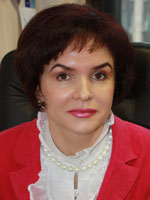
O. V. Gaman-Golutvina
MGIMO University; HSE University
Russian Federation
Russian Federation
Dr. Oxana V. Gaman-Golutvina – Head, Department of Comparative Politics, MGIMO University; President, Russian Association of Political Science; Editor-in-Chief, “Comparative Politics Russia” Journal; Member, Civic Chamber of the Russian Federation and Moscow; Corresponding Member, Russian Academy of Sciences; Professor, HSE University.
76 Prospect Vernadskogo, Moscow, 119454
References
1. Ankersmit F. (2004) Reprezentativnaya demokratiya [Representative democracy]. Logos [Logos] (2). (In Russian).
2. Austin R. Berekashvili T., Cheterian V. et al. (2009) Media, democracy and freedom: The post-communist experience. Edited by M. Dyczok and O. Gaman-Golutvina. Bern: Peter Lang.
3. Belarus v tsifrakh – 2023 [Belarus in figures – 2023] (2023). National Statistical Committee of the Republic of Belarus. (In Russian).
4. Bolgova I.V. (2017) Politika Rossii na postsovetskom prostranstve: tsikly i labirinty [Russia’s policy in the post-Soviet space: cycles and labyrinths]. In: Evolyutsiya postsovetskogo prostranstva: proshloe, nastoyashchee, budushchee [Evolution of the post-Soviet space: past, present, future]. Moscow: RIAC, pp. 88–92. (In Russian).
5. Brzezinski Z. (1997) The Grand Chessboard: American Primacy and Its Geostrategic Imperative. New York.
6. Byulleten’ o tekushchikh tendentsiyakh mirovoy ekonomiki [Bulletin on current trends in the global economy] (2017) No 18, March. Expert Center under the Government of the Russian Federation. (In Russian).
7. Chelovecheskiy kapital rossiyskikh politicheskikh elit [Human capital of Russian political elites] (2012). Eds. E.B. Shestopal and A.V. Selezneva. Moscow: ROSSPEN. (In Russian).
8. Chistilin D.K. (2022) Ukraina, Gruziya, Moldaviya mezhdu ES i Rossiey [Ukraine, Georgia, Moldova between the EU and Russia]. Moscow: Knizhnyy mir. (In Russian).
9. Dinamika innovatsiy [Dynamics of innovations] (2011) Ed. V.I. Suprun. Novosibirsk. (In Russian).
10. Evolyutsiya postsovetskogo prostranstva: proshloe, nastoyashchee, budushchee: khrestomatiya [Evolution of the post-Soviet space: past, present, future: reader] (2017) Moscow: RIAC. (In Russian).
11. Gaman-Golutvina O.V. (2025a) Mozaika stranovedcheskikh issledovaniy: kazusno-orientirovannyy podkhod [Mosaic of Regional Studies: A Case-Oriented Approach]. Sravnitel’naya politika [Comparative Politics Russia] 16(1): 4–24. DOI: 10.46272/2221-3279-20241-16-1. (In Russian).
12. Gaman-Golutvina O.V. (2025b) Mozaika stranovedcheskikh issledovaniy v makroregional’nom kontekste [Mosaic of Regional Studies in a Macroregional Context]. Sravnitel’naya politika [Comparative Politics Russia] 16(2): 6–25. DOI: 10.46272/2221-3279-2024-2-16-1. (In Russian).
13. Gaman-Golutvina O.V., Ponomareva E.G., Shishelina L.N. (2014) “Vostochnoe partnerstvo”: bor’ba stsenariev razvitiya [Eastern Partnership: competing development scenarios]. Polis (5): 20–40. (In Russian).
14. God planety: Ezhegodnik IMEMO RAN [Yearbook of IMEMO RAS] (2025) Issue 2024: Economy, politics, security. Eds. V.G. Baranovskiy and E.G. Solov’ev. Moscow: Ideya-Press. (In Russian).
15. Haushofer A. (1951) Allgemeine politische Geographie und Geopolitik. Heidelberg.
16. Hill F., Gaddy C. (2003) The Siberian Curse: How Communist Planners Left Russia Out in the Cold. Brookings Institution Press, Washington. 240 p.
17. Huntington S.P. (1996) The Clash of Civilizations and the Remaking of World Order. New York.
18. Ioffe G. (2014) Reassessing Lukashenka: Belarus in cultural and geopolitical context. Basingstoke, Hampshire: Palgrave Macmillan. 305 p.
19. Istoriya Rossiyskoy assotsiatsii politicheskoy nauki [History of the Russian Political Science Association] (2015) Eds. S.V. Patrushev and L.E. Filippova. Moscow. (In Russian).
20. Kostovicova D., Bojicic-Dzelilovic V. (eds) (2009) Persistent state weakness in the global age. Farnham: Ashgate, 213 p.
21. Mackinder H.J. (1904) The Geographical Pivot of History. The Geographical Journal.
22. Mackinder H.J. (1919) Democratic Ideals and Reality. A Study in the Politics of Reconstruction. New York.
23. Mahan A.T. (1970, or. 1897) The Interest of America in Sea Power, Present and Future. Boston.
24. Mahan A.T. (1987, or. 1890) The Influence of Sea Power upon History, 1660–1783. New York.
25. Meleshkina E.Yu. (2013) Postimperskie prostranstva: osobennosti formirovaniya gosudarstva i natsiy [Post-imperial spaces: features of state and nation-building]. Politicheskaya nauka [Political Studies] (3). (In Russian).
26. Meleshkina E.Yu. and Kudryashova I.V. (2022) Posle imperiy: mozhno li perekovat’ mechi na orala? [After empires: can swords be beaten into ploughshares?]. Politicheskaya nauka [Political Studies] (1): 14–51. DOI: 10.31249/poln/2022.01.01. (In Russian).
27. Mezhevich N.M. (2022) Teoreticheskie predposylki i prakticheskie vozmozhnosti rossiysko-belorusskogo sotrudnichestva [Theoretical premises and practical opportunities of Russian-Belarusian cooperation]. Mezhdunarodnaya zhizn’ [International Affairs] (5): 28-37. (In Russian).
28. Mezhevich N.M. (2024) Belarus’: transformatsiya i modernizatsiya. Itogi postsovetskogo razvitiya [Belarus: transformation and modernization. Results of post-Soviet development]. Moscow: Institute of Europe RAS. (In Russian).
29. Miller A.I. (2013) Modernye imperii: problemy klassifikatsii, mekhanizmy konsolidatsii i raspada [Modern empires: classification problems, mechanisms of consolidation and disintegration]. Politicheskaya nauka (3). (In Russian).
30. Politicheskie protsessy na postsovetskom prostranstve: novye trendy i starye problemy [Political processes in the post-Soviet space: new trends and old problems]. (2020) Eds. E.G. Solov’ev and G.I. Chufrin. Moscow: IMEMO RAS. (In Russian).
31. Politicheskiy klass v sovremennom obshchestve [The political class in contemporary society]. (2012) Ed. O.V. Gaman-Golutvina. Moscow: ROSSPEN. (In Russian).
32. Postsovetskie gosudarstva na sovremennom etape: vnutripoliticheskaya dinamika i poisk putey razvitiya [Post-Soviet states at the present stage: domestic political dynamics and development paths] (2024). Ed. E.G. Solov’ev. Moscow: IMEMO RAS. (In Russian).
33. Samokhovets M.P., Grechishkina E.A., Glazkova N.G. (2020) Vneshnyaya torgovlya Respubliki Belarus’: tendentsii i perspektivy [Foreign trade of the Republic of Belarus: trends and prospects]. Regional’naya ekonomika. Yug Rossii [Regional Economy. South of Russia] 8(3): 15–23. (In Russian).
34. Shamakhov V.A., Maksimtsev I.A., Mezhevich N.M. (2019) Vneshneekonomicheskie svyazi Rossii i Belarusi: ob”ektivnye vozmozhnosti i sub”ektivnye prepyatstviya razvitiya [Foreign economic relations between Russia and Belarus: objective opportunities and subjective constraints]. Upravlencheskoe konsul’tirovanie [Administrative Consulting] (10): 8–16. (In Russian).
35. Shevtsov Yu.V. (2005) Ob”edinennaya natsiya. Fenomen Belorussii [The united nation: the phenomenon of Belarus]. Moscow: Evropa. (In Russian).
36. Sovremennye mezhdunarodnye otnosheniya [Contemporary international relations] (2012) Eds. A.V. Torkunov and A.V. Malgin. Moscow: Aspekt-Press. (In Russian).
37. Trenin D.V. (2017) Rossiya i strany SNG: “vzroslenie” otnosheniy [Russia and the CIS countries: the “maturation” of relations]. In: Evolyutsiya postsovetskogo prostranstva: proshloe, nastoyashchee, budushchee: khrestomatiya [Evolution of the post-Soviet space: past, present, future]. Moscow: RIAC. (In Russian).
38. Tven M. (1906) My – anglosaksy [We are Anglo-Saxons]. (In Russian).
39. Vladytskiy A.S. (2017) Postsovetskoe prostranstvo v sovremennoy geopoliticheskoy strukture mira [The post-Soviet space in the modern geopolitical structure of the world]. Izvestiya TulGU. Gumanitarnye nauki [Izvestiya Tula State University. Humanitarian Sciences] (4): 56–62. (In Russian).
Review
For citations:
Gaman-Golutvina O.V. The Post-soviet Area in the Space of Meanings and Ambiguous Trajectories of Evolution. Comparative Politics Russia. 2025;16(3):4-29. (In Russ.) https://doi.org/10.46272/2221-3279-2025-3-16-1
Views:
557
JATS XML



 Email this article